

Reflections from the 2026 National Social Cohesion & Inclusion Conference
By Randeep Singh Grewal, UNITED SIKHS Australia
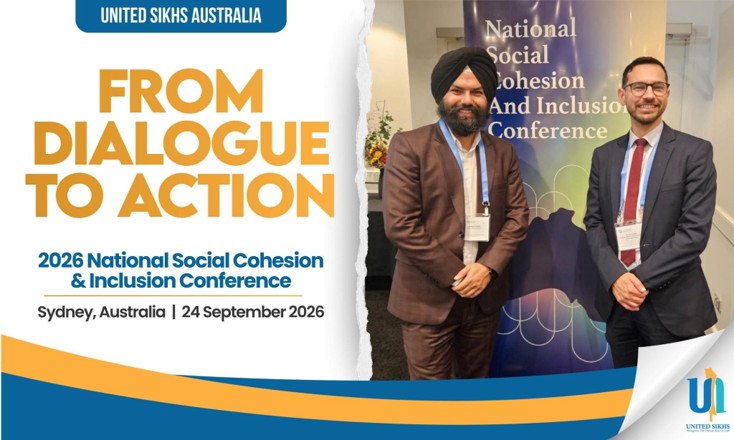
It was a privilege to represent UNITED SIKHS Australia at the 2026 National Social Cohesion & Inclusion Conference, held on 24 September at Rydges World Square, Sydney.
The conference brought together a diverse group of stakeholders, including interfaith leaders, community and non-profit organisations, academics and government representatives, including participants from Multicultural NSW and the NSW Department of Communities and Justice.
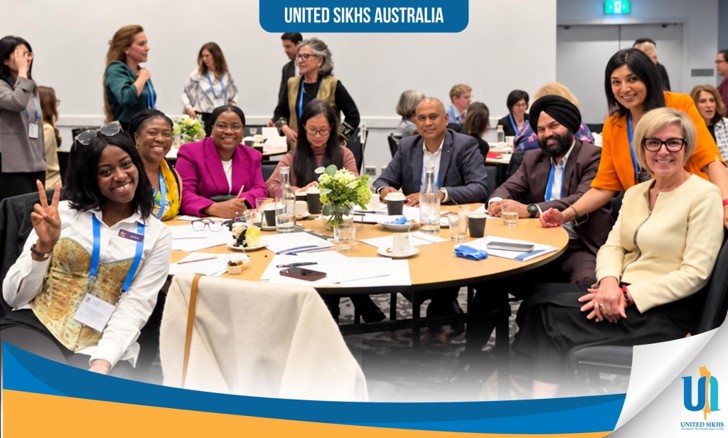
One of the highlights was the round-table engagement, where people from different communities and institutions exchanged experiences and explored practical ways to strengthen social cohesion where the discussions centred on
Four Key themes:
- Constructive and unifying dialogue;
- Extending participation through neighbourhoods and communities;
- – Redefining relationships across leadership and institutions; and – Drawing on the capacities of young people.
A powerful message throughout the day was that diversity alone does not automatically create social cohesion, it requires genuine dialogue, trust, belonging, meaningful participation and relationships that cross cultural, religious and institutional boundaries.
The discussions highlighted the importance of belonging, participation, social justice and acceptance in building social cohesion.
A Sikh perspective and a Commitment to Action
In the Conference I highlighted that Sikh Gurdwaras are open to everyone, regardless of faith, ethnicity, culture or background. The Sikh principles of Seva (selfless service), equality, human dignity, sharing and Sarbat da Bhala (the wellbeing of all humanity) provide a strong foundation for contributing practically to social cohesion.
Our Gurdwaras should continue to be more than places of worship. They can serve as welcoming community spaces where people come together, share Langar, learn from one another, volunteer side by side and build genuine relationships that strengthen social connections.
Following the conference, UNITED SIKHS Australia will work towards developing a Social Cohesion Framework and Strategy in partnership with Sikh Gurdwaras and Sikh organisations across Australia.
The aim is to take the ideas and challenges discussed at the conference and turn them into practical, grassroots initiatives that create meaningful impact within our communities.
This can include Gurdwara open days, Langar and community service initiatives, interfaith and intercultural dialogue, youth leadership and mentorship, engagement with First Nations communities, community education, neighbourhood partnerships and stronger collaboration with government and civil society.
From Consultation to Collaboration
Another important issue for me is how communities contribute to policy development.
The Sikh community is ready to work constructively with local, state and federal governments, community organisations, interfaith partners and other stakeholders not only to identify challenges but also to help shape solutions, inform policy and support practical action.
Social cohesion cannot be the responsibility of the government alone, nor by communities working in isolation. It requires reciprocity, trust and a shared responsibility.
A more meaningful conversation may be to ask: How can governments and communities work together, and what role can each play in strengthening Australian society.
Young Australians also need to be recognised as agents of change. Their voices should be heard, their strengths recognised and their participation supported through leadership opportunities, mentorship and meaningful involvement in community and institutional decision-making processes.
The simplest but most important messages I took away from the conference was:
Listen genuinely. Understand the difference. Own your voice. Open doors for others. Build relationships. Turn dialogue into action.
Australia’s diversity is one of the defining strengths of our society. Our collective challenge is to translate that diversity into belonging, trust, active participation, mutual respect and shared responsibility.